
close
Choose Your Site
Global
Social Media
Views: 0 Author: Site Editor Publish Time: 2026-11-11 Origin: Site


The construction and manufacturing sectors are currently undergoing a massive paradigm shift toward sustainable building materials. Driven by strict environmental regulations and a growing emphasis on green building certifications like LEED, the integration of plant-derived polyurethanes into adhesives has surged. These innovative formulations offer exceptional durability along with a drastic reduction in volatile organic compounds compared to legacy petrochemical products.
Recent industry trend analyses reveal a sharp pivot in the global market. As ESG—Environmental, Social, and Governance—mandates tighten across North America and Europe, the demand for renewable adhesives is skyrocketing. Market data shows that contractors and industrial manufacturers are actively seeking alternatives that lower carbon footprints without sacrificing structural integrity. However, the primary technical bottleneck hindering even faster adoption remains the unpredictable hardening speed of these eco-friendly options when compared to traditional synthetics.
Professionals and DIY enthusiasts alike frequently encounter this exact frustration on the job site: sluggish or entirely stalled hardening rates. Time is money in construction. Waiting days for a joint to solidify brings workflows to a grinding halt. While these green materials are highly effective, their chemical cross-linking process is inherently sensitive to both their internal molecular makeup and external weather conditions. This comprehensive guide dissecting the underlying science will provide actionable, field-tested strategies to optimize your polymerization timeline and ensure rock-solid structural integrity for your next project.
Drying vs. Hardening: Surface drying is merely the initial superficial step. Achieving full structural readiness takes significantly longer and ultimately dictates the final strength of the adhesive bond.
Moisture is the Engine: For single-component, moisture-dependent systems, inadequate ambient moisture is the leading cause of a delayed reaction.
Chemical Drivers Matter: In two-part systems, an improper mix ratio will drastically impede the internal chemical reaction required for hardening.
Temperature Sensitivity: Cold environments naturally decelerate the cross-linking process of polymer chains, extending the necessary wait time before the applied bead can be safely subjected to mechanical stress.
Formulation Quality: Sourcing high-grade raw materials ensures consistent reactivity, reliable performance, and predictable project timelines across various applications.
A frequent point of confusion on busy job sites is the stark difference between a joint feeling dry to the touch and it being structurally sound. Misinterpreting these two distinct phases often leads workers to prematurely subject the joint to mechanical stress. In my years in the field, I have seen countless crews walk over or paint a freshly sealed joint just because the surface felt solid, which inevitably results in cohesive failure or severe material degradation.
Imagine applying a fresh bead of caulk around an exterior window frame. As the extruded material interacts with ambient air, the outermost surface reacts to create a thin, non-tacky protective layer. This initial phase—known as Skin Formation—generally occurs quite rapidly. Depending on the specific product architecture, it can happen within thirty minutes to a few hours.
Nevertheless, a skinned-over surface is a deceptive milestone. The interior of the bead remains soft, gooey, and entirely unreacted. Treating this superficial dryness as the finish line is a primary cause of premature adhesive failure. The joint is simply not yet prepared for water exposure, physical movement, or load-bearing applications.
The complete maturation of the joint is defined as the exact moment when the chemical cross-linking between the polyol and the isocyanate reaches one hundred percent completion throughout the entire depth and volume of the applied material. At this definitive stage, the product has achieved its maximum engineered hardness, tensile strength, and elasticity.
Depending on the specific industrial formulation, this comprehensive cross-linking can take anywhere from twenty-four hours to several weeks. Thicker applications naturally demand extended periods because the chemical reaction must slowly penetrate from the outer barrier down to the deepest point of the substrate.
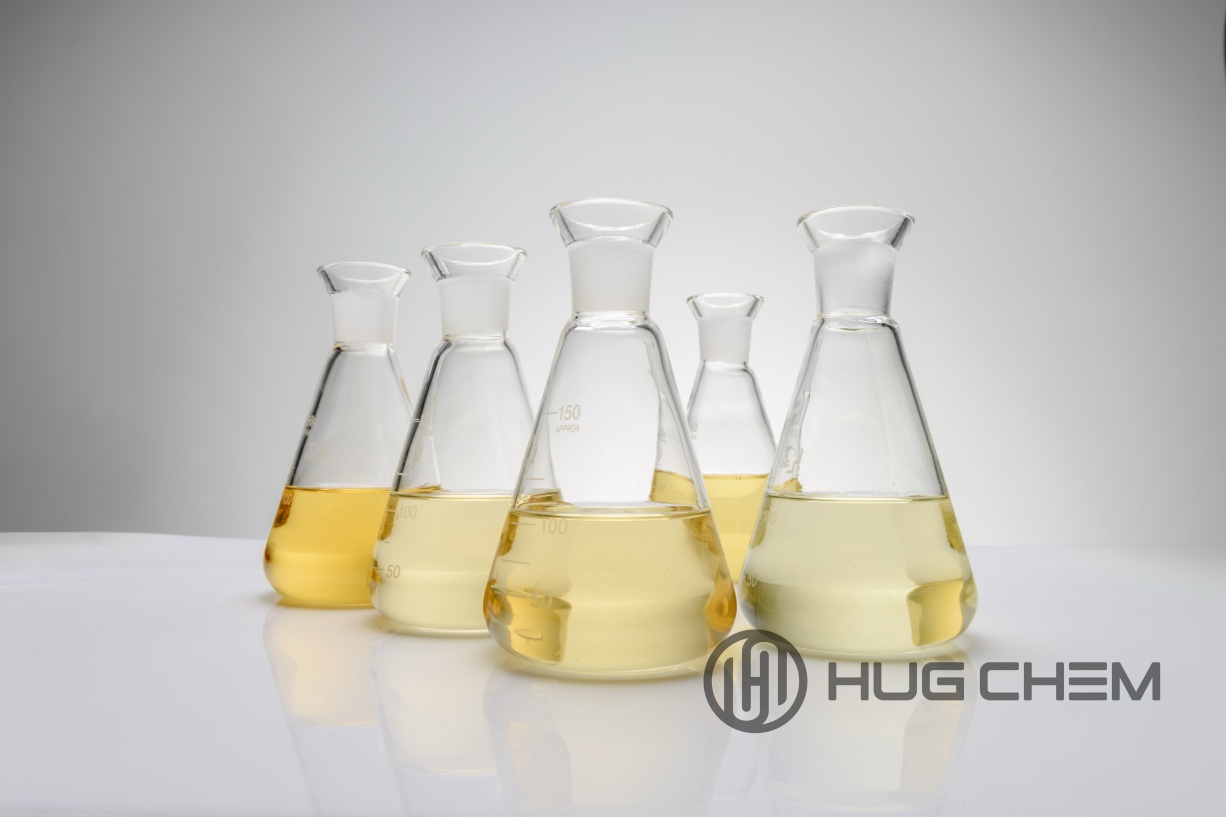
To fully grasp why sustainable alternatives sometimes exhibit sluggish reactivity, we must examine their unique molecular architecture. Formulators are constantly forced to balance ecological benefits with practical performance speeds.
Standard synthetic polyols are explicitly engineered in laboratories to feature highly reactive primary hydroxyl groups. These groups bond aggressively and rapidly with curing agents. In stark contrast, materials derived from renewable agricultural resources—such as soybean, castor, or palm oil—frequently feature secondary hydroxyl groups.
From a thermodynamic standpoint, these secondary groups are sterically hindered. In simpler terms, their bulky molecular shape makes it physically difficult for curing agents to access and react with them. Because these natural functional groups react at an inherently slower pace, utilizing a standard Bio-Based Polyol without advanced chemical modification will naturally extend the overall timeline. Manufacturers must carefully navigate this chemical reality.
Feature | Synthetic Polyols | Modified Bio-Polyols |
|---|---|---|
Hydroxyl Type | Primary Highly Reactive | Secondary or Modified Primary |
Reaction Speed | Very Fast | Moderate to Fast |
Environmental Impact | High Carbon Footprint | Low Carbon, Renewable |
Application Focus | Legacy Construction | LEED & Green Certified Projects |
Even the most precisely engineered and expensive formulations are entirely at the mercy of the job site environment. External climate conditions remain the most frequent culprits behind unexpectedly slow project turnarounds.
The intimate relationship between ambient temperature and chemical reactivity is governed by basic thermodynamics. Heat acts as a natural accelerator, increasing molecular kinetic energy and encouraging rapid bonding. Cold weather, on the other hand, severely restricts molecular movement.
When applying these sustainable adhesives in chilly environments, the cross-linking process decelerates dramatically. Industry standards typically recommend an application window between 40 degrees and 90 degrees Fahrenheit. If the thermometer drops near freezing, the chemical reaction may stall entirely. The material will just sit in the joint as a dormant, paste-like substance until ambient warmth returns to re-initiate the process.
For single-part eco-friendly systems, atmospheric water vapor is not just a passive environmental factor; it is the active chemical trigger. These products actively pull moisture from the air to initiate polymerization.
In arid climates, or during deep winter months when indoor heating strips the air of its moisture, low Humidity becomes a severe liability. If the relative moisture drops below thirty percent, there is simply not enough ambient water vapor to penetrate the extruded bead. While the exposed surface might still dry out by scavenging whatever trace moisture exists, the deeper layers are starved. This leaves the center of the joint structurally compromised for weeks.
Beyond external weather constraints, the internal chemical engine of the product itself plays a definitive role. Additive ratios and the overall freshness of the product are vital considerations for any applicator.
In polyurethane chemistry, a catalyst is a specialized additive designed to lower the activation energy required for a reaction. This effectively puts the cross-linking process on the fast track.
An inadequate Catalyst Level will severely bottleneck the entire operation. This deficiency typically stems from three scenarios: rare manufacturing defects at the factory, intentional formulation designs meant to provide a longer working time for complex industrial assemblies, or severe user error. In two-part systems, if a contractor fails to mix the base resin and hardener at the exact specified ratio, the active agents will not be evenly distributed. The result is a patchy, sluggish, or entirely failed bond.
All chemical building materials possess a finite shelf life, generally ranging from nine to twelve months. As time passes, the active curing agents and adhesion promoters naturally degrade. This degradation accelerates heavily if the tubes are subjected to extreme temperature fluctuations in a work truck or an uninsulated warehouse. Attempting to use a product that has surpassed its expiration date guarantees a sluggish or completely incomplete reaction. Always verify batch codes before beginning critical structural work.
Even with optimal weather and fresh, perfectly mixed chemistry, poor application techniques can easily sabotage the timeline. User error is a massive variable on any construction site.
One of the most widespread field errors is applying the bead far too thickly. In single-component setups, atmospheric moisture must physically travel from the exposed surface down to the very bottom of the joint.
If the gap is excessively deep, the outer layer rapidly solidifies. Once this top layer forms, it effectively acts as an impenetrable vapor barrier. It seals off the underlying gooey layers from the ambient air they desperately need. Consequently, the bottom of the bead may remain wet for an indefinite period. To mitigate this, professionals utilize foam backer rods to control depth, ensuring the applied material never exceeds the manufacturer's maximum thickness specifications.
The physical nature of the materials being bonded also heavily influences the timeline. Injecting material between two completely non-porous substrates—such as heavy glass panels, metal sheets, or glazed porcelain tiles—means that water vapor cannot seep in from the sides or the bottom.
Furthermore, if this non-porous assembly is located in a cramped, enclosed space with zero ventilation, the material is effectively trapped in a vacuum. Without fresh air circulating to supply a continuous stream of moisture, the wait time extends exponentially.
If you are battling tight project deadlines or operating in suboptimal environmental conditions, there are scientifically sound, practical methods to speed things up without compromising the integrity of the final bond.
Because temperature and atmospheric moisture are the primary external drivers, artificially manipulating the immediate workspace climate is your most effective intervention.
Specifically, utilizing safe, indirect space heaters to elevate the room temperature to an optimal 70 to 80 degrees Fahrenheit will rapidly accelerate molecular cross-linking. In addition, if you are working in an arid environment, deploying portable commercial humidifiers can raise the relative moisture to the ideal fifty to seventy percent range. This force-feeds single-component systems the exact water vapor they require to harden efficiently.
For industrial manufacturers and high-volume assembly lines, the ultimate solution often lies upstream at the formulation stage. If off-the-shelf products are causing production bottlenecks, you can collaborate directly with chemical engineers to adjust the internal chemistry.
By introducing specific chemical accelerators engineered to target and activate stubborn secondary hydroxyl groups, manufacturers can customize the reactivity profile. This tailored approach ensures the product maintains its highly desired eco-friendly footprint while seamlessly meeting rigorous industrial cycle times.
Selecting the appropriate raw materials from the very beginning is the most foolproof strategy to avoid costly delays. As the green chemistry sector matures, buyers no longer have to accept a steep compromise between sustainability and raw performance.
When evaluating raw materials for your formulation, you need hard numbers. Historically, opting for a plant-derived product meant resigning yourself to a longer wait. However, modern chemical engineering has successfully bridged this gap through epoxidation or ring-opening processes.
For optimal performance, high-quality modified bio-polyols should target a hydroxyl value between 200 and 300 mg KOH/g. This specific range closely mimics the rapid reactivity of synthetic alternatives, ensuring a swift Sealant Cure. You also want to look for a viscosity range of 1000 to 3000 mPa.s at room temperature to ensure smooth extrusion without sagging. Functionality should ideally sit around 2.0 to 3.0 to perfectly balance elasticity and tensile strength.
Ultimately, the consistency of your material's performance is inextricably linked to the quality control of the raw materials. It is absolutely vital to source your supplies from reputable chemical manufacturers who enforce stringent quality assurance protocols.
A trusted supplier guarantees stable additive levels, precise moisture content in the raw materials, and consistent hydroxyl values batch after batch. Partnering with established industry leaders ensures that you receive highly reactive, chemically stable materials that perform predictably in the field. This safeguards both your project deadlines and your professional reputation.
Integrating eco-friendly adhesives into your workflow is a highly commendable and increasingly necessary step in modern construction and manufacturing. However, mastering their application requires a nuanced understanding of their unique chemical behaviors and physical limitations.
The maturation timeline of these sustainable products is heavily dictated by ambient moisture, environmental temperature, application thickness, and internal chemical drivers. By clearly distinguishing between superficial surface drying and full structural hardening, you can prevent catastrophic joint failures and ensure long-lasting results.
Before initiating your next project, take the time to evaluate your workspace climate, verify product expiration dates, and adjust your application techniques accordingly. If you are struggling with inconsistent hardening times or looking to upgrade your green building materials, selecting the right chemical foundation is non-negotiable. Explore high-performance, chemically optimized solutions at Hugchem to find the exact formulation that meets your project's rigorous demands.
The timeline varies significantly depending on the specific formulation, joint thickness, and ambient environment. Generally, surface drying occurs within thirty minutes to two hours. However, achieving full structural readiness typically takes anywhere from twenty-four to seventy-two hours. For exceptionally thick applications or in very dry, cold environments, complete polymerization can take up to several weeks.
For single-component, moisture-dependent systems, higher atmospheric moisture actively accelerates the process because the chemical reaction relies on water vapor to cross-link. However, it is crucial to avoid excessive, direct water exposure—such as heavy rain or standing water—before the initial surface layer solidifies. Direct water can wash away the uncured product or permanently ruin its structural integrity.
No. Surface drying only indicates that the outermost layer has reacted with the air and is non-tacky to the touch. The interior of the bead remains soft, wet, and entirely unreacted. Applying physical stress, water pressure, or heavy loads to the joint before the full maturation period is reached will disrupt the internal structure and cause the seal to fail prematurely.
If a two-component system fails to harden, it is almost universally due to an improper mixing ratio. Failing to measure the base resin and hardener accurately results in an inadequate concentration of active agents, stalling the reaction entirely. Additionally, applying the product in temperatures that fall significantly below the manufacturer's recommended threshold can cause the chemical reaction to become dormant.
Yes, absolutely. As these products age past their printed expiration dates, the active ingredients, adhesion promoters, and catalysts begin to chemically degrade. Using expired materials will drastically slow down the hardening rate, reduce the final bond strength, or in severe cases, prevent the material from solidifying entirely. Always verify expiration dates before application.
Bubbling or blistering usually occurs when the material is applied to a damp substrate, or if the ambient temperature is excessively high. In polyurethane chemistry, moisture reacts with isocyanates to release carbon dioxide gas. If the surface skins over too quickly due to high heat while gas is still being produced underneath, those gas bubbles become trapped in the bead, weakening the final joint.
Using a direct, high-intensity heat gun is highly discouraged. While mild ambient heat helps, blasting the joint with a heat gun will cause the surface to skin over far too rapidly. This traps the underlying material, preventing moisture from penetrating the deeper layers. It can also cause the material to boil or bubble, permanently compromising the structural integrity of the bond. Always use indirect space heaters instead.
